Laa mie! Welcome to our year-long festivities celebrating the Isle of Man's Year of the Manx Language.
Highlighting the island's rich history and Celtic language, this year honours the Manx people’s heritage and connection with the island. Whether native to the island or travelling from beyond its shores, this passionate tribute encourages everyone to get involved, offering activities designed to engage all ages and nationalities.
History of the Manx language
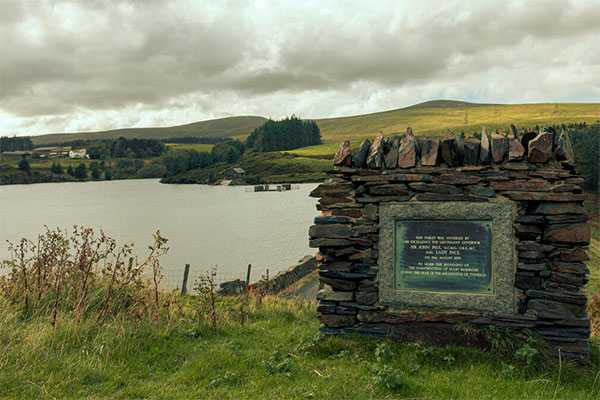
First developed in the 4th and 5th centuries by Irish and Scottish settlers, the Isle of Man is home to the ancient Celtic Manx language. Replacing the Brythonic language native to the island, Manx was formed through the seamless blend of both Brythonic and foreign tongues, making it closely related to Old Irish and Scottish Gaelic. Despite these similarities, Manx Gaelic pronunciations and spelling conventions remain distinct, especially compared to its distantly related Celtic languages: Cornish, Welsh, and Breton. Reflecting the uniqueness of island life and our connection to maritime culture, the Manx vocabulary highlights the island's immense national pride that continues to this day.
Despite the island's rule as part of the Viking Scandinavian kingdom in the 8th century, the Norse settlement left little impact on the progression of early Manx culture. With the death of the last King of Mann and the return of Scottish rule in 1265, the Manx language evolved and flourished, with the first written form developed by John Philips, the Welsh Bishop of Sodor and Mann, centuries later in 1610.
Spoken by the island's entire population for centuries, the Manx language rapidly declined following the Duke of Atholl selling the Isle of Man to the British Empire in 1765. Fearing the loss of their national heritage, many Manx people immigrated elsewhere. Over time, UNESCO officially declared the language extinct in 2009 after the death of the last Manx native speaker, Edward (Ned) Maddrel, in 1974 (whose former home, Riverside Cottage, is now a property of Island Escapes). However, thanks to a small number of dedicated Manx learners, UNESCO revisited this status to ‘critically endangered’ just months later, exemplifying the importance of this lasting celebration.
The Year of the Manx Language
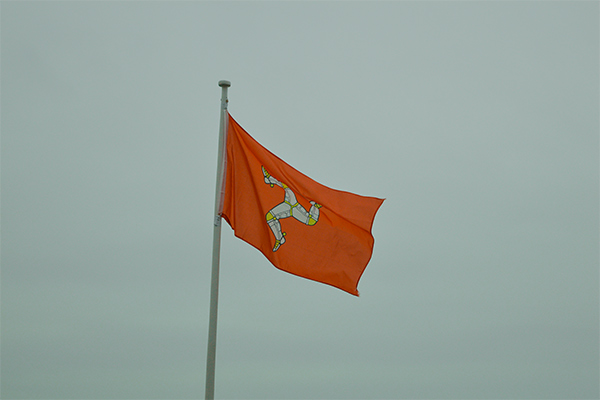
In light of its unfortunate decrease, there have been recent efforts to revive and preserve the language. With initial attempts commencing in the late 1800s driven by enthusiasts of the Manx Language Society, collecting recordings of Manx classes and native speakers in their element, Tynwald (the island's parliament) officially recognised the language in 1985.
Now a vibrant language community with over two thousand speakers, the Manx language network, Jeebin, aims to increase this number to five thousand by 2032, creating a promising future for the language. Championing their ethos of ‘Manx language for all’, the network established 2026 as the Year of the Manx Language (Blein ny Gaelgey), celebrating its cultural heritage and enduring spirit of its ancestry; a prominent reason why the Isle of Man became the world's first entire jurisdiction declared as a UNESCO biosphere reserve.
Hosted by Jeebin, Island Escapes sponsored the launch of this year-long celebration in November 2025, enjoying an array of cultural performances to encourage all generations to learn the speech native to the Isle of Man. Celebrations will include an abundance of concerts, workshops, lectures, and educational projects designed to showcase and ignite a connection to Manx culture throughout the year.
2026 celebrates numerous Manx cultural milestones, honouring:
- The Bunscoill Ghaelgagh primary school: the only school in the world that teaches entirely in Manx Gaelic and has done so for 25 years.
- The Mooinjer Veggey educational charity, who have dedicated 30 years to supporting the island's children and families.
- The first Manx language lesson was taught in schools 35 years ago.
- The Cooceil ny Gaelgey (the Manx language advisory council) was established 40 years ago, providing translation and support for the language.
Commonly used greetings
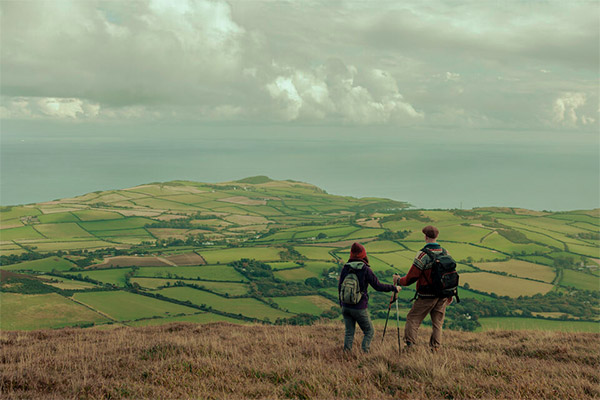 Participate in the island's rich culture with these everyday greetings and phrases before your next trip.
- Moghrey mie: Good morning
- Fast yr mie: Good afternoon/ evening
- Laa mie: Good day
- Bannaghtyn: Greetings/ blessings
- Fault ort: Welcome
- Kys t’ou: How are you doing
- Cre’n ennym t’ort: What's your name?
- Gura mie ayd: Thank you (singular)
- Gura mie eu: Thank you (plural)
- My sailt: Please
- Traa dy liooar: Time enough
- Oie vie: Good night
- Slane lhiat: Goodbye (singular)
- Slane lhiu: Goodbye (plural/ formal)
- Cair vie!: Bon voyage/ pleasant journey
Festivities
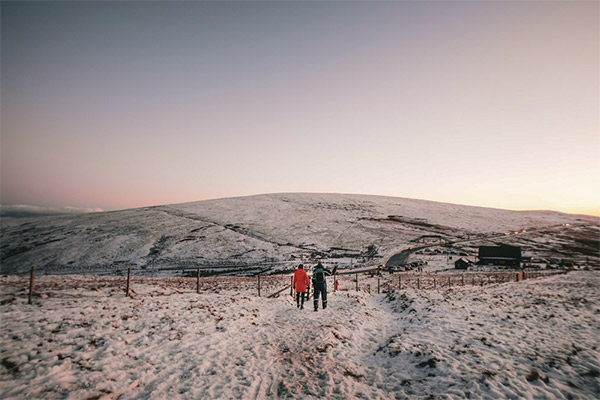
Celebrate Christmas on the island with these seasonal greetings.
- Nollick Ghennal: Merry Christmas
- Blein Vie Noa: Happy New Year
- Laa ruggyree sonney dhyt: Happy birthday
- Moylley as soylley: Congratulations
- Jeant dy mie: Well done
- Lesh graih: With love
- Slaynt vie: Cheers
Manx idioms and sayings
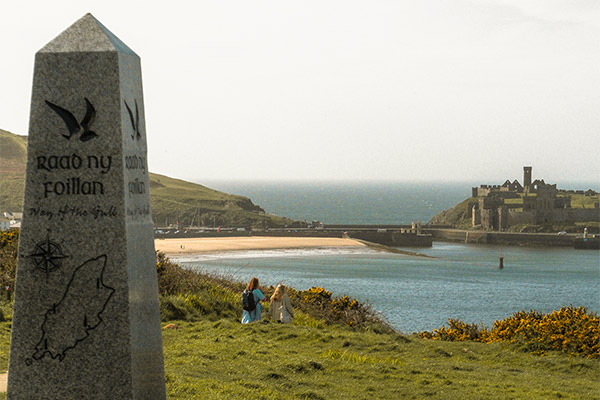
With only a select few phrases surviving the language's steady decline, these enduring Manx phrases reveal a fascinating glimpse into the island's history.
The English equivalent of ‘cheers’ historically yelled when people drank together, shoh slaynt translates to here’s health.
Linking to an old Celtic form of blessing, the traditional Manx greeting hallo the house was shouted when announcing one's presence to everyone in a household, a necessary declaration during an era when doors remained unlocked.
A Gaelic tradition used to showcase national loyalty and support, mannin aboo translates to hurrah for the Isle of Man. Interestingly, Mannin was once the ancient Gaelic name for the Isle of Man, honouring the legend of Manannan Mac Lir, a sea god in Gaelic mythology. Known for his sovereignty of the Isle of Man's coast, legend states he protected the island using his mist of invisibility to conceal the land from its enemies. Historic Manx traditions, fulfilled to this day, involve offering rushes to Manannan at the top of South Barrule annually, a gesture of paying for residency on the peaceful island. Learn more about enchanting Manx folklore and legends of the island.

Linking back to the near extinction of the language, many terms emerged during these periods of uncertainty and hardship. Like the yelling of mannin aboo, a similar Gaelic tradition gaelg aboo is cheered to celebrate the revival and endurance of the Manx language, translating to hurrah for the Manx language. To voice concern over the language's decline and demand its cultural survival, the phrase cheer gyn çhengey, çheer gyn ennym was popularised, translating to a country without a language is a country without a name and gyn çhengey, gyn çheer, meaning no language, no country.
Equivalent to the English saying once in a blue moon, a moon of gobbags is typically said on the Isle of Man to describe both a strange occurrence and the passing of time. Translating directly as moon of snails, this originates from an old Celtic tradition describing the moons and seasons, with gobbags referring to supernatural creatures spoken of poetically to describe unusual events at nightfall.
Another majestical term used to describe the passing of time, between the lights signifies the importance of learning from life experiences over prolonged durations. More specifically referring to the significant Manx time between the starlight (moonlight) and dawn, this period of nightfall was believed to be a flourishing time for the growth and harvesting of medicinal herbs (also known as magic herbs).
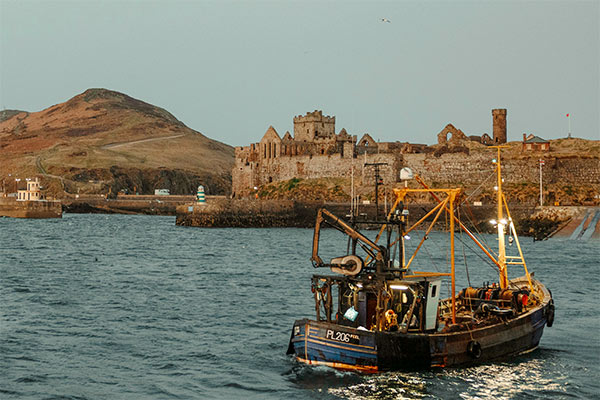
Reflecting the historical significance of the fishing ports to the town of Peel, till Peel fair is in the harbour is the Manx equivalent of saying forever, never and a very long time simultaneously. This term highlights the unlikely event that the town fair would be held in the harbour. When used in conversation, stating that someone will be waiting until Peel’s fair is in the harbour typically means they will be waiting an eternity.
To describe someone acting as though they hold a higher status than they do, the phrase to give one self airs is commonly used. For instance, to describe a person who is showing off after winning the lottery, Manx people would say they’ve been giving themselves airs since they won all that money.
A common cultural trait on the island is the habit of not directly answering a question, but rather replying with a counter-question. This habit is otherwise known as giving a Manx answer.
Directly used to describe someone who is thoroughly Manx, the phrase as Manx as the hills illustrates a deep connection someone has to their homeland, suggesting this person has been Manx for as long as the hills have stood on the island.
Keen to put these phrases to the test? Explore our charming holiday cottages across the Isle of Man for a true taste of Manx culture.
Gaelg Aboo!