Set adrift in the Irish Sea between England and Ireland, the Isle of Man is rich in folk tales and legends that continue to be an intrinsic part of Manx life to this very day. Heavily influenced by Celtic and Norse traditions, the soul of the seafaring island seeps through their oral history via song and storytelling, while the land itself still feels to be inhabited by ancient gods and spirits as well as fairies and mythical creatures.
From the fae (fairy folk) and ghostly black dogs to sea gods and evil giants, there are stories aplenty to immerse yourself in as you explore this ancient, beautiful land.
Here’s a selection of the Isle of Man’s spellbinding stories to get you started.
A note of warning: These tales cover all sorts of whimsical and sometimes dark topics, so proceed with caution…
The Manannán mac Lir
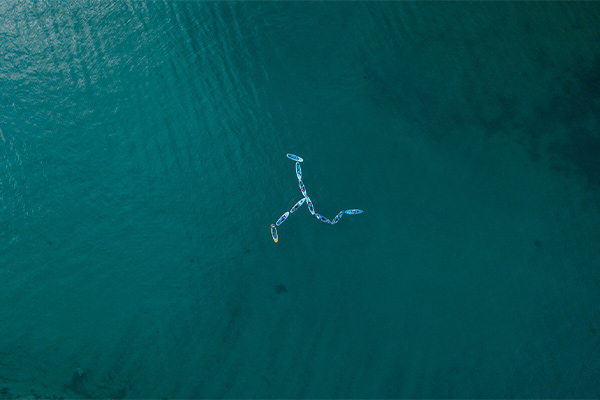 The Manannán mac Lir, or God of the Sea, is an integral part of Manx lore and a revered sea deity, warrior, and god of the underworld who protects the Isle of Man by covering it in a shroud of mist to protect it from invaders. Kindly and benign, the Manannán mac Lir often provides guidance and support for heroic types, and can also stop those with evil intentions with a veil of forgetfulness so they can’t remember what they’re doing.
He’s held in such high regard that the island is supposedly named after him. Taking many forms, such as a three-legged fiery form (from which the triskelion, the Isle of Man's symbol of three armoured legs, is possibly based), he’s a kindly protector that continues to have a place in every islander’s heart.
The Moddey Dhoo of Peel Castle
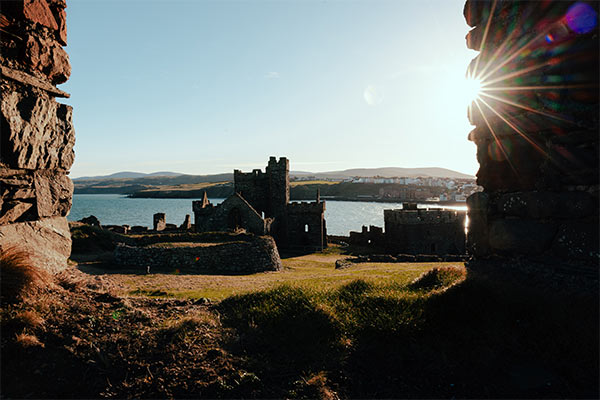
The Moddey Dhoo, which means Black Dog in Manx Gaelic, is a well-known ghostly figure in Manx folklore (so famous as to be mentioned in literature by the likes of Sir Walter Scott and Bram Stoker). First spotted back in the 17th century by a castle guard who, apparently, was so frightened by the phantom dog that he died of shock, the Moddey Dhoo was drawn to the warming fire of the guard room at Peel Castle.
A black silhouette with eyes glowing like burning coals, the ghost hound instilled fear into the guards and soldiers, as it was said to be an augury of death and bad luck. One slightly inebriated soldier decided to confront the beast and was never seen again, and he was believed to have fallen foul of the beast. Since then, the Moddey Dhoo has been spotted many times at the castle and indeed all around the island over the years, said to always be seeking the warmth of a fire. So, if you have a fire lit and hear the ghostly, sorrowful howl of a dog, prepare to greet Moddey Dhoo.
The Buggane
Let’s hope you don’t meet the formidable Buggane on your travels around the Isle of Man. Mean and cold-hearted, he’s a shape-shifting giant with ill intentions, said to lurk around the ruins of St Trinian’s Church, whose roof he would rip off any time builders try to replace it. One particular tale talks of a tailor called Timothy, who, in an attempt to trick the Buggane into leaving, bet that he could finish sewing a pair of trousers inside the church before the Buggane could rip the roof off.
The Buggane happily took up the bet, taunting Timothy with his hideous body, razor-sharp teeth, and long, scratchy nails. But Tim refused to look up and sewed on. Just as the Buggane got up to take the roof off, Timothy completed the last stitch and ran out of the church as the roof was pulled down. Although furious, the Buggane could not follow him onto consecrated ground, so in a rage ripped off his own head and threw it at Timothy, where it exploded. Tim survived, but the roof was never repaired again.
The Mooinjer-Veggey
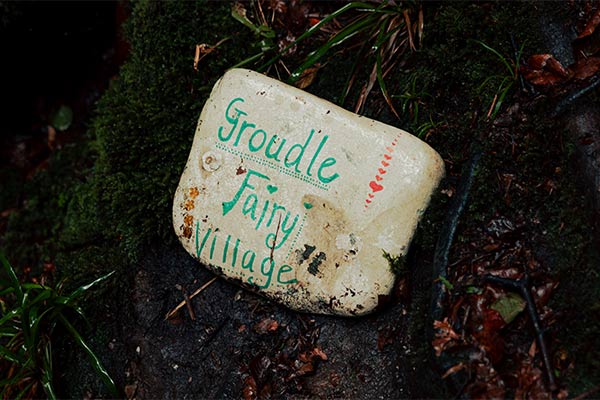
The Mooinjer-Veggey, or ‘Little People’, are the fairies (or fae) of the Isle of Man. Unlike the common depiction of fairies as tiny beings with wings, the Manx fae are said to be delicately featured and the size of a small child who look beautiful from a distance but change into something completely different the closer you get. Living in hillsides, the Mooinjer-Veggey can be cruel or kind, depending on their mood.
They’re as happy curing the ill and helping those in need as attacking people, bringing bad luck and even abducting people and taking them to the land of fae should they feel like it. Lovers of the hunt with a firm hierarchy (there’s a royal family in the fae kingdom), you might just spot the Mooinjer-Veggey by their blue and green clothing and little red hats, especially around burial mounds, which are said to be their homes of choice. There are several fairy bridges on the Isle of Man, so make sure you say hello to the fairies as you cross for good luck.
The Glashtyn
Being surrounded by the sea, it’s no surprise that the Isle of Man has its own water creatures in its mythology. The Glashtyn (also known as the Cabbyl Ushtey) is one you don’t want to bump into when you’re having a peaceful dip. This shape-shifting water horse (with hooves pointing the wrong way) is a malicious type who likes to lure humans into the murky depths to drown them, often disguising itself as something else to get them to enter the water.
But beware, the Glashtyn, with its black, sleek, and menacing visage, doesn’t just lurk in the sea. Any quiet pond, lake or river is his home, and he’s particularly active around dusk, when old wives’ tales warn us to stay away from quiet, still waters. He’ll often appear as a dark-haired, green-eyed man to lure in an unsuspecting maiden passing by, but his tufted ears will give him away. Confusingly, the Glashtyn is also described as a water-bull or even a goblin-like creature, but it all adds to the creature’s shapeshifting reputation.
The Phynnodderee
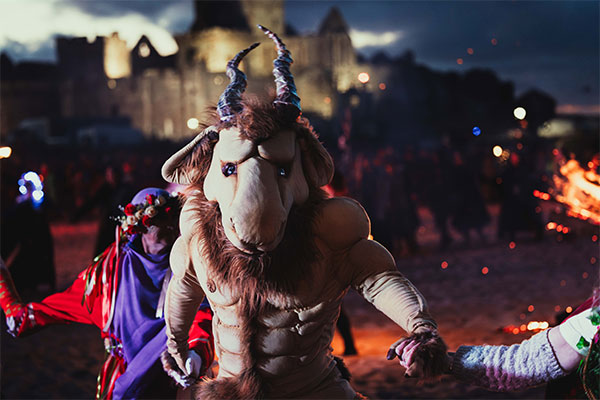
Said to be similar to a Scottish brownie, satyr or a goblin, the Phynnodderee (also known as the Fenodyree) is a tragic figure in Manx folklore. A ‘fallen’ member of the fae, the poor Phynnodderee is a solitary magical creature who can sometimes be called on to help, especially by farmers who need some help with physical labour.
Tradition has it that he was once part of the fairy royal family who was unfortunate enough to fall in love with a human girl. He left the royal court to woo her and was banished as his punishment, stripped of his beauty and fae magic and doomed to wander the island in search of a connection for the rest of time. He is said to be hairy, incredibly strong, humble and kind, seeking redemption through helping people with chores. Farmers would often wake to find fields ploughed, or corn threshed, and would attribute it to the kindly Phynnodderee, and would leave out jugs of fresh milk as thanks, for if you offended him, he would quickly vanish, never to return.
Tehi-Tegi the Enchantress
This tale tells of a beautiful and clever enchantress who lived on the Isle of Man. While her sweet voice and pretty face could lure the birds from the trees, Tehi-Tegi wasn’t a nice person. So enchanting was she that the men of the island stopped whatever they were doing and would follow her around, abandoning their farms and families, leading the land to fall into ruin.
One day, she announced that she would go riding, so she mounted her horse, and over 600 men followed her, utterly helpless under her spell. Across the island she rode, the poor men following her in the vain hope that she would choose one of them as her husband, until they approached a large river. Tehi-Tegi cast a spell, making it look like a small, shallow stream, and the men walked into it. Almost immediately, she broke the spell, and the water came thunderously upon them, drowning them all. Laughing, Tehi-Tegi leapt from her horse, transformed into a bat and flew away, never to be seen again.
Hop tu Naa
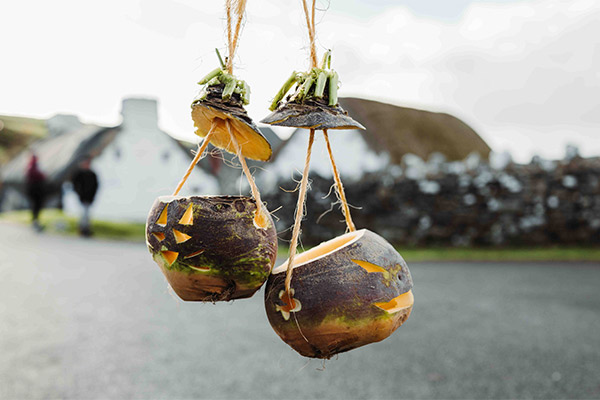
Hop tu Naa may be considered the Isle of Man’s version of Halloween, but it’s thought that this ancient tradition actually predates it. Taking place on the 31st of October, the Celtic festival celebrates the end of the harvest season and the beginning of the winter months. Similar to Halloween, it’s believed to be the night when the spirit world is that little bit closer, and when the Manx people carve turnips into lanterns (known as moots). Turnips are incredibly hard to carve, as they’re much harder than pumpkins, and their odd, wonky faces give off their own spooky charm.
Other traditions include children going from house to house, singing local folk songs (such as Jinny the Witch, a celebrated, but feared, local wisewoman). Other events include divination and fortune telling (such as peeling an apple in one piece and throwing it over your shoulder to reveal the first letter of your future spouse), while more well-known activities, such as fancy dress, are taken up with gusto.
The Adhene
While often mistaken for the Mooinjer-Veggy, these small, child-like beings are said to be former angels. Cast out from heaven, but not bad enough to be accepted into hell, they made their home on the Isle of Man. Living very much like their human neighbours, the Adhene fished, cared for cattle, and lived harmoniously on the land.
They were good at hiding and would only occasionally be spotted, with islanders knowing a good harvest was on the horizon if they saw the Adhene building storage containers. The Adhene, like the fae, could be mischievous too… If a baby were to vanish from its crib, or a wife were to go for a walk one day and never come back, or even just rustling in the bushes, the Adhene were blamed. However, if a person was on a mission of compassion, the Adhene would be rendered powerless and would leave them alone. Neither wholly good nor wholly bad, the Adhene are a testament to the moral ambiguity of folklore.
Feeling inspired? Take a look at our beautiful holiday cottages on the Isle of Man and start planning your folklore-themed getaway today.